01 / Program origin
Built from scratch.
Every earlier TTM program re-engineered an established platform. The Beaver is the first designed from first principles - concept definition, formal trade studies, then parametric CAD.
TTM · Program BVR-001
6.8 TVCM · Ultra-compact SOF battle rifle
01 / Program origin
Every earlier TTM program re-engineered an established platform. The Beaver is the first designed from first principles - concept definition, formal trade studies, then parametric CAD.
02 / BCG kinematics
A two-piece cylindrical carrier in Maraging Stainless Steel and Carpenter 158. Its rear half is the buffer, so the recoil spring travels perfectly linearly inside an exceptionally slim receiver.
03 / Mission envelope
Level-4 armour defeat at 500 m, an SR-25 magwell and a fully tucked suppressor - inside the size and weight profile of a standard 5.56 rifle.
Cartridge architecture
Polymer-cased · 65,000 PSI · Level 4 @ 500 m
01 / Selection
The program rejected the 800-metre armour-defeat standard as an Afghan-theatre relic and locked the realistic 500-metre infantry limit instead - which is exactly what unlocks a lower-pressure polymer case.
02 / Pressure
Fifteen thousand PSI below .277 Fury. Far less thermomechanical stress on the bolt and chamber, slower barrel wear, and an acoustic signature that survives a drone-monitored battlespace.
03 / Mass & heat
The polymer casing also insulates. It carries heat out of the chamber on ejection instead of soaking it into the receiver, which is what makes sustained suppressive fire practical.
The Beaver is not a hybrid of existing platforms. Each subsystem was independently evaluated through a formal trade study, then integrated into a single coherent chassis.
6.8 TVCM polymer casing: 30% lighter than brass, thermally insulating, 65,000 PSI chamber pressure, and reliable Level-4 defeat at the realistic 500 m infantry engagement limit.
Two-piece cylindrical carrier in Maraging Stainless Steel + Carpenter 158. Rear half acts as integrated buffer - zero carrier tilt, perfectly linear recoil in an exceptionally slim envelope.
Adjustable short-stroke piston at mid-length (9-inch) dwell. Op-rod return spring anchored at the upper receiver - thermally isolated from the suppressed gas block, preventing rod buckling under sustained fire.
7075-T6 aluminum with a 1.000-inch bore. SR-25 magwell for maximum internal volume. Knurled press-fit steel top-hat inserts on all critical fasteners - steel-on-steel lockdown at 65,000 PSI.
Every previous TTM program was a rigorous CAD analysis and re-engineering of established military platforms. The TTM Beaver is something fundamentally different. It is the first TTM platform designed entirely from scratch - a next-generation Special Forces rifle developed through the full engineering cycle, from concept definition through formal trade studies to parametric CAD modeling.
Using Milanote as a master design board , every subsystem - from the cartridge to the bolt carrier - was subjected to a formal trade study. Competing platforms were disassembled on paper: the SIG MCX, HK416, FN ARKA, and Q Boombox were each analyzed to identify where they compromise. The Beaver resolves those conflicts in a single integrated design. The foundational requirement rejected the US military's 800-meter armor-defeat standard - identified as an Afghan theater relic - in favor of the 500-meter realistic infantry engagement limit, which unlocks the lower-pressure, polymer-cased 6.8 TVCM cartridge as the optimal solution.
The TTM Beaver harnesses the extreme compactness of the Q Boombox, the relentless reliability of an HK416 short-stroke gas piston, and the 30% weight reduction of the 6.8 TVCM polymer cartridge - delivering maximum lethality without compromising the acoustic signature or maneuverability required for modern urban and trench warfare.
Using advanced materials not widely available until recently - aerospace-grade Maraging Stainless Steel for the BCG and polymer-composite 6.8 TVCM casings - the result is a suppressed, zero-tilt CQB platform capable of defeating Level-4 body armor at 500 meters in the size and weight profile of a standard 5.56 rifle.
The TTM Beaver is not designed behind closed doors. The entire engineering process - every trade study, platform comparison, and architectural decision - is documented in an open Milanote board accessible to anyone. This is how TTM approaches original design: transparent, rigorous, and defensible.
All trade study data, platform analysis, and engineering decisions are publicly documented. No paywalls. No NDAs. This is open engineering.
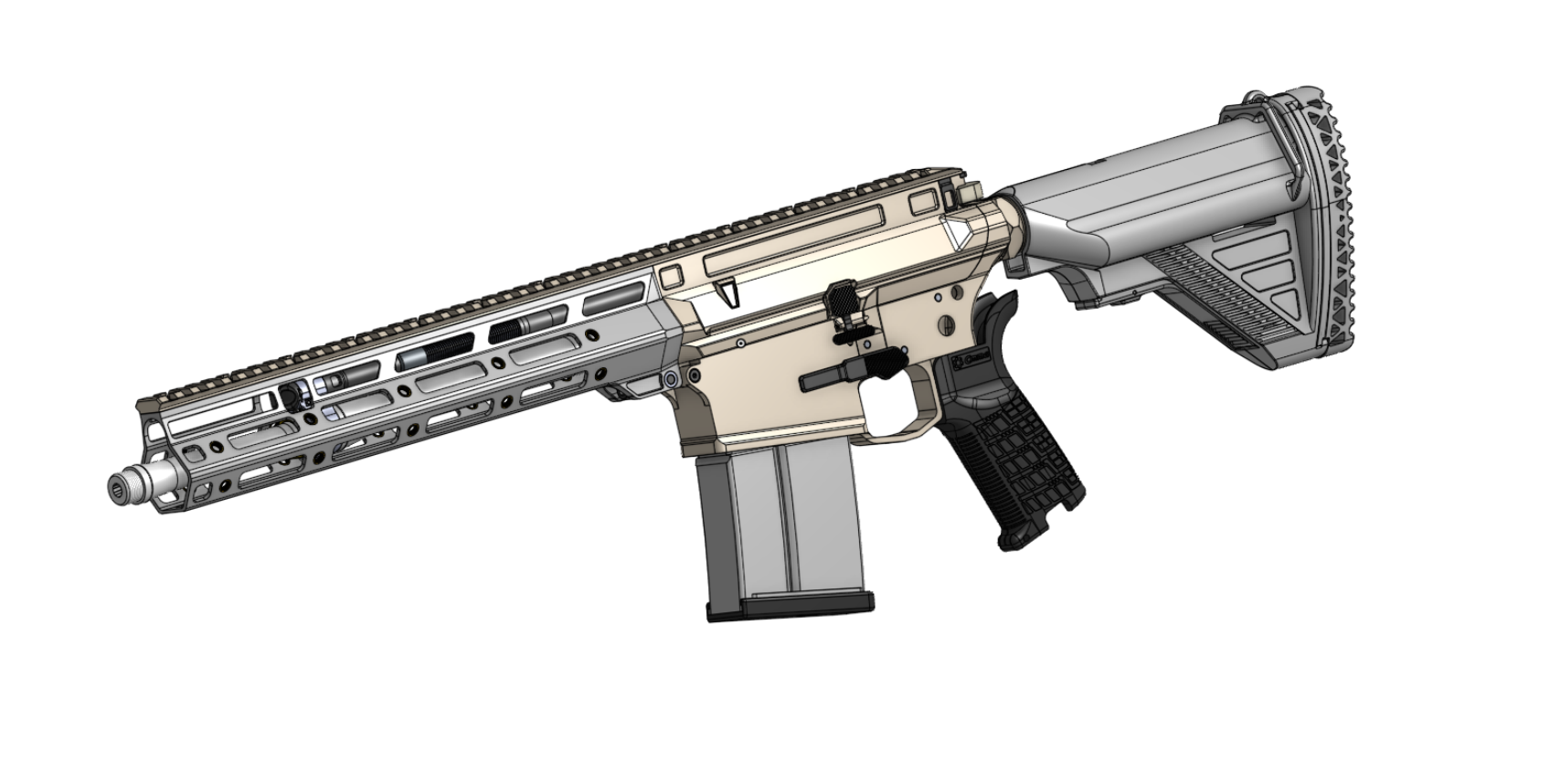
Parametric upper receiver and BCG geometry at early development stage. Models are under active iteration - dimensions, features, and assembly interfaces subject to ongoing change.
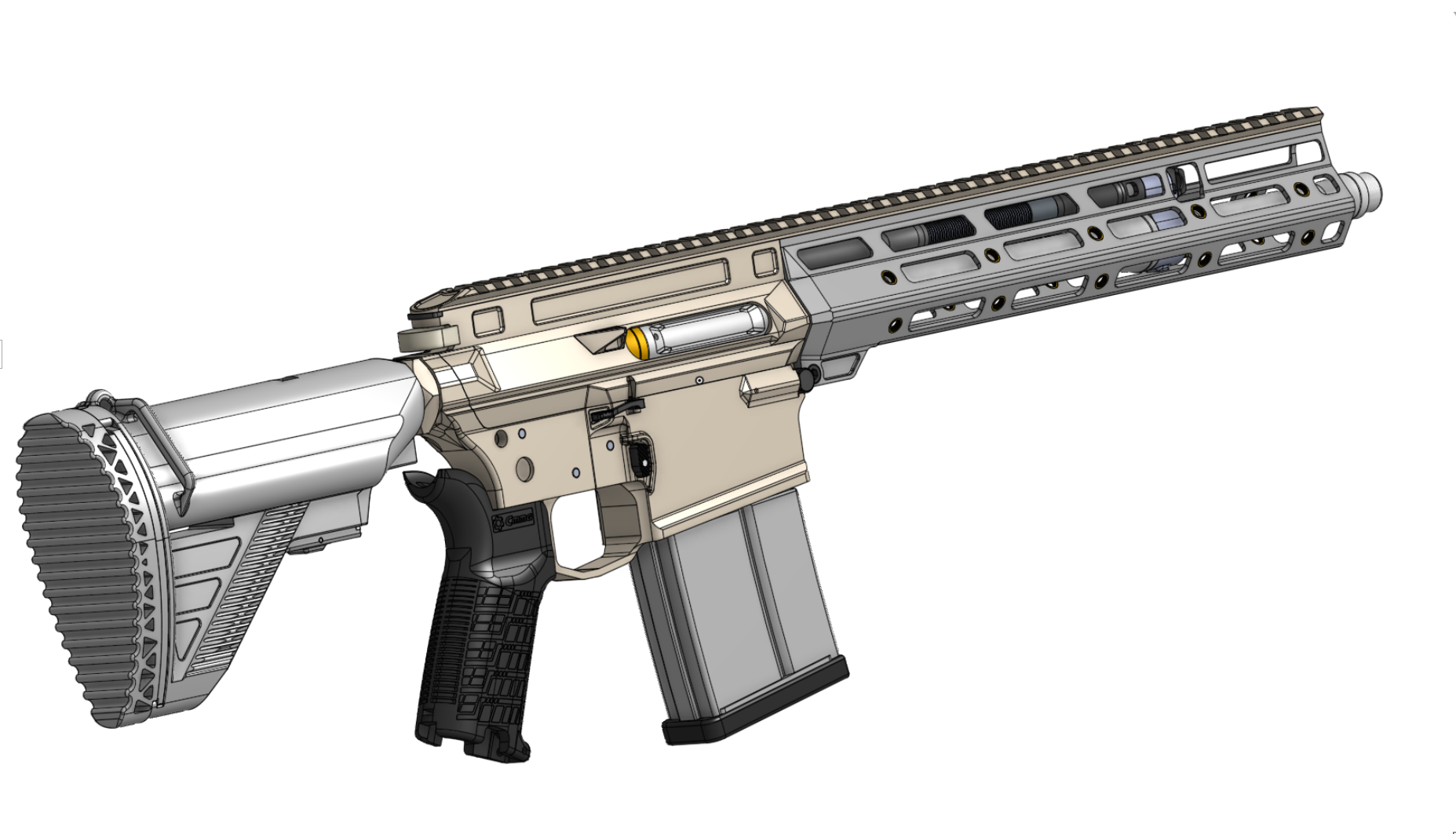
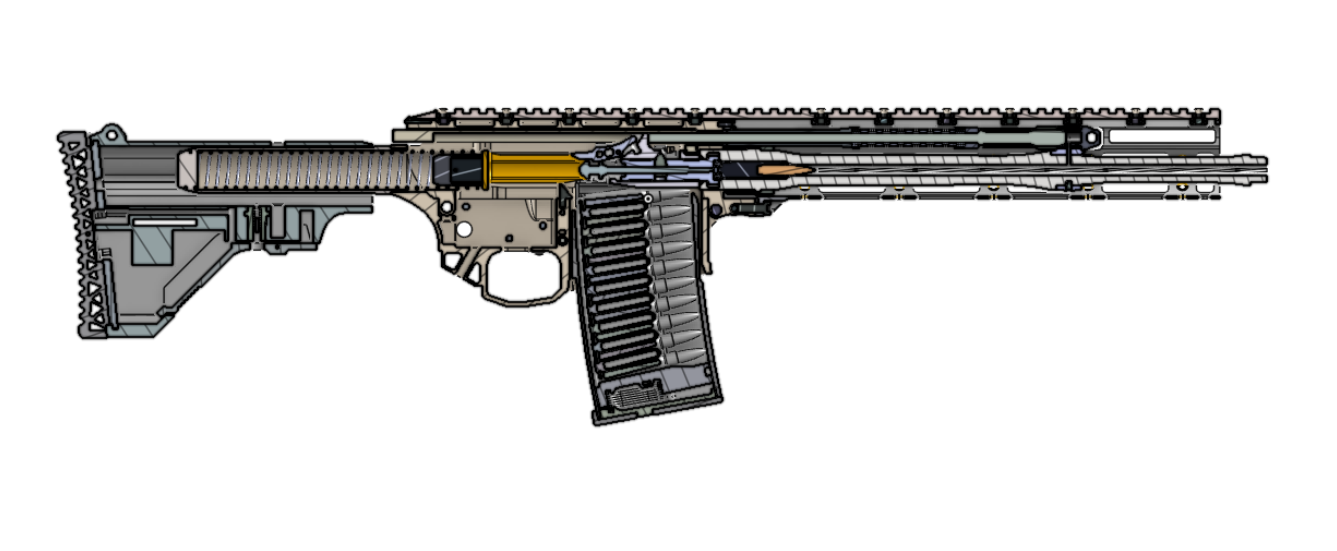
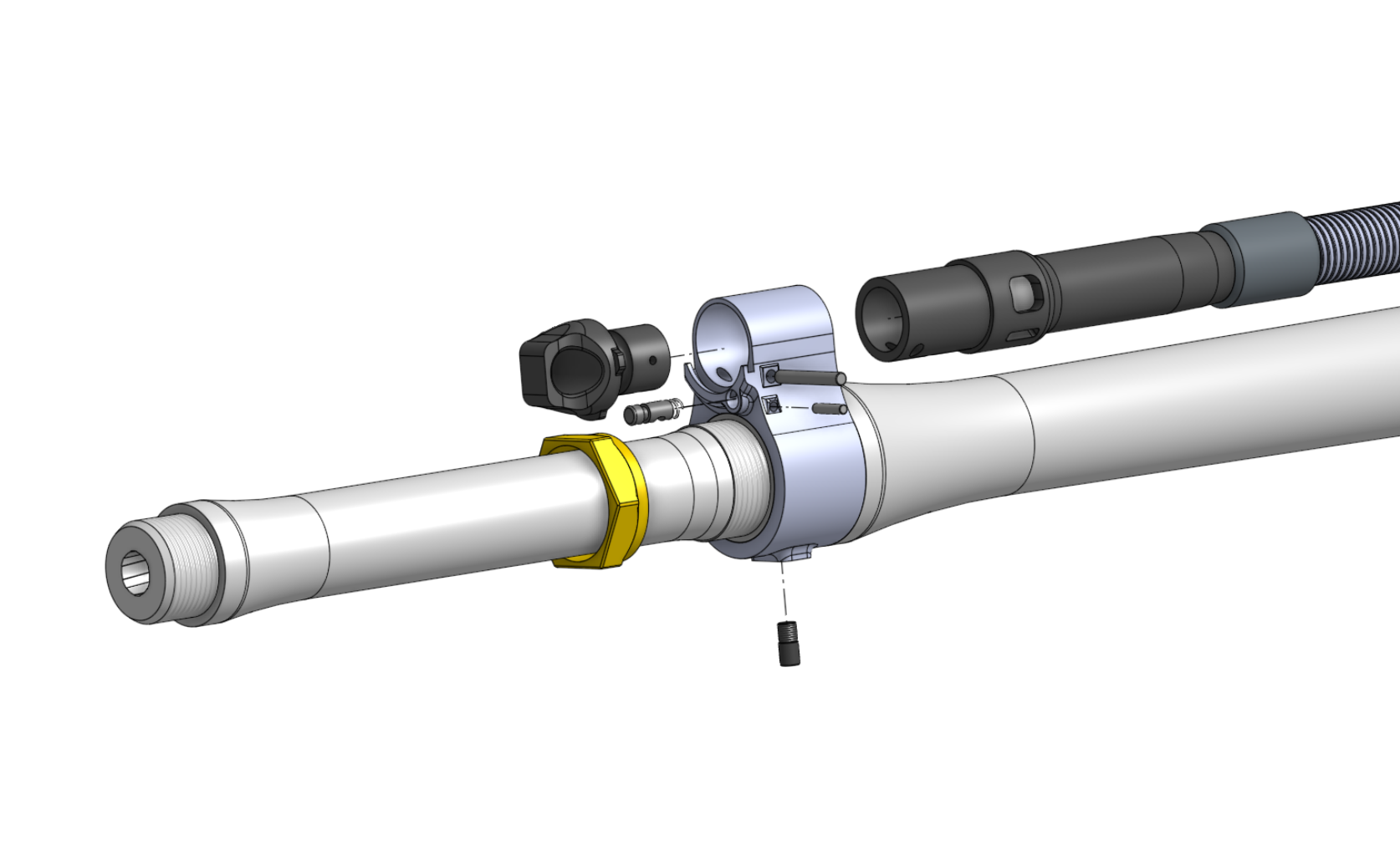
Every subsystem was evaluated against competing solutions before a single dimension was drawn. These are the decisions that define the Beaver.
View master design board on MilanoteCandidates evaluated: .277 Fury vs. 6.8 TVCM polymer
Candidates evaluated: monolithic carrier · top op-rod · TTM two-piece cylindrical
Candidates evaluated: direct impingement · long-stroke piston · short-stroke piston
Existing platforms each solve part of the problem. The Beaver is engineered to solve all of it simultaneously - without accepting any of their mechanical penalties.
From concept definition to final parametric CAD - the complete engineering lifecycle, documented at every step.
Mission requirements defined. Formal trade studies conducted across ammunition, BCG kinematics, gas architecture, and chassis design. All platform-level decisions locked using the Milanote master design board.
6.8 TVCM polymer cartridge selected over .277 Fury. 65,000 PSI pressure cycle validated against bolt thrust, chamber geometry, and polymer case extraction dwell requirements.
Two-piece cylindrical carrier geometry established. Mid-length (9-inch) gas port dwell confirmed. Material specifications - Maraging Stainless Steel + Carpenter 158 - and spring isolation geometry finalized.
Upper receiver bore geometry, BCG interface, gas block mounting, op-rod housing, and rail system modeled parametrically. Renders available above.
SR-25 magwell dimensioning, ambidextrous control layout, integrated collapsible stock interface, and press-fit insert locations to be parametrically modeled.
Complete parametric assembly, interference checks, tolerance stack analysis, and publication of final specifications and full CAD renders.
The TTM Beaver is the first TTM platform designed entirely from scratch. All prior programs - the SIG SPEAR, CMMG MK47, MP7, and others - involved rigorous re-engineering and CAD analysis of existing platforms. The Beaver applies the same methodology to an original weapons system.
Specifications represent engineering targets derived from the formal trade study process. Final dimensions will be published upon assembly completion and integration validation.
forge programs --active
BEAVER ORIGINAL DESIGN
Partnerships, technical questions, or joining the build team - reach out directly or apply for an engineering role on the Beaver program. This is a ground-up design effort; serious contributors welcome.